July 2026
Lanchester Armoured Car
Rolls Royce Armoured Car
Link to Website Index: 
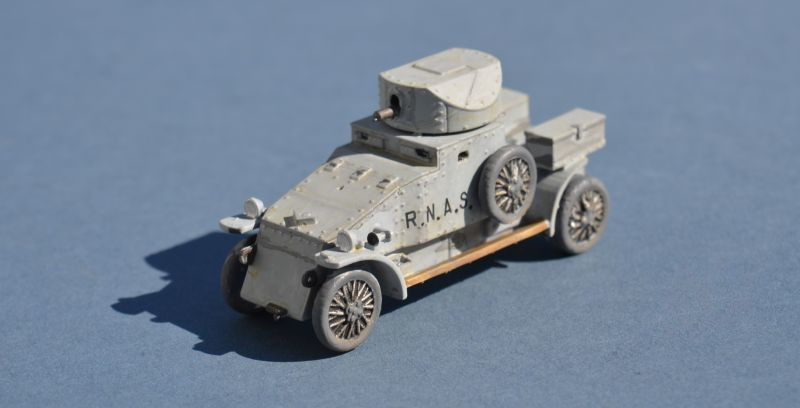
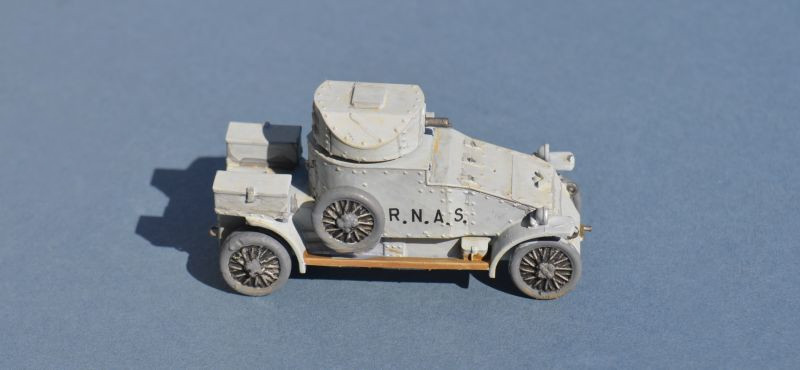
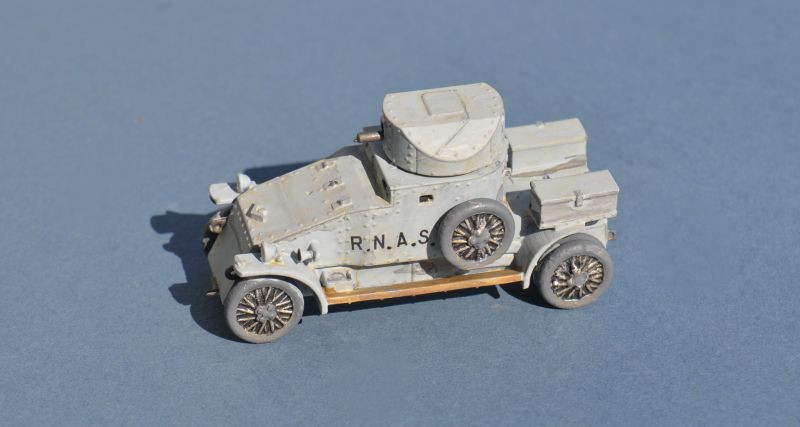
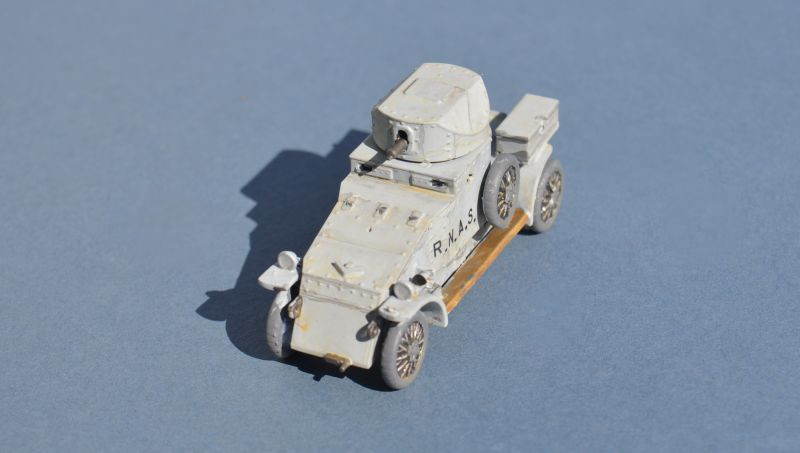
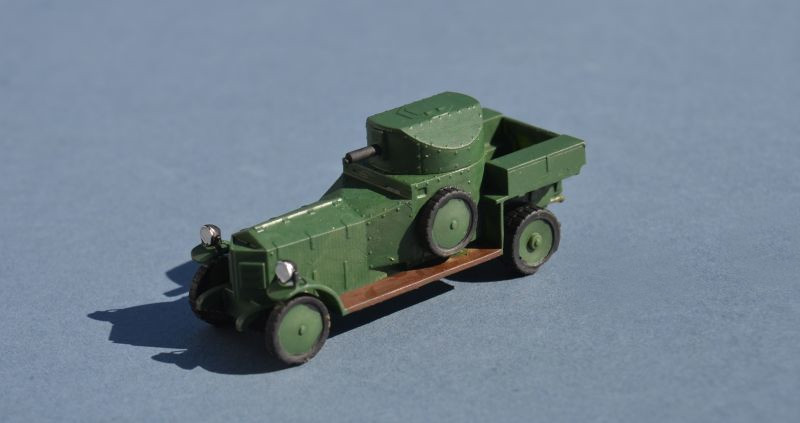
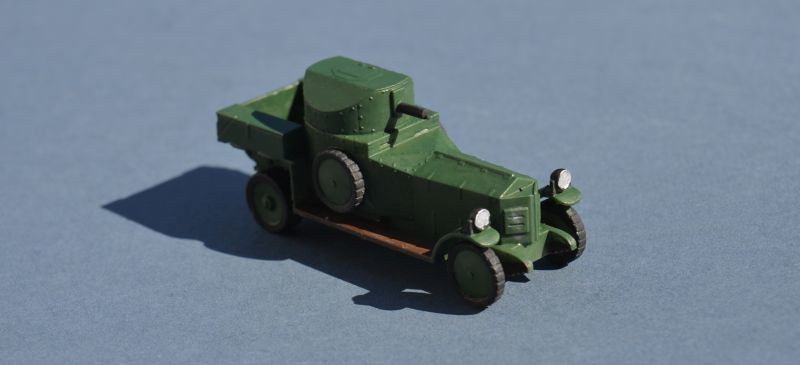
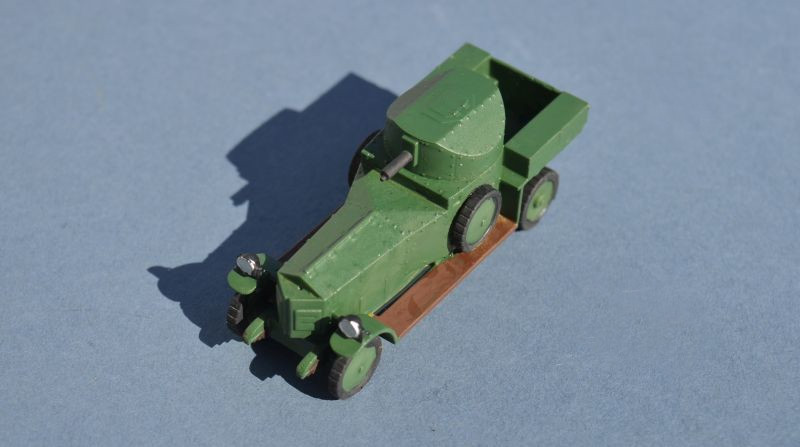
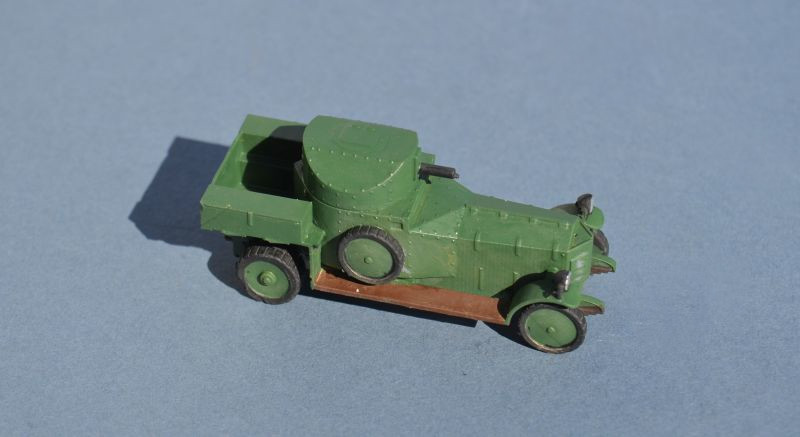
Lanchester Armoured Car
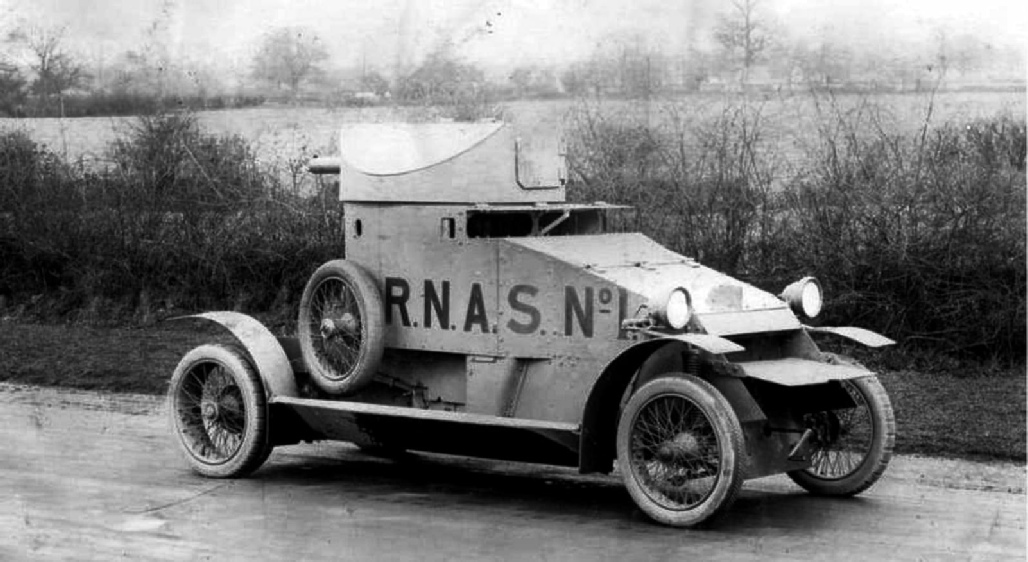
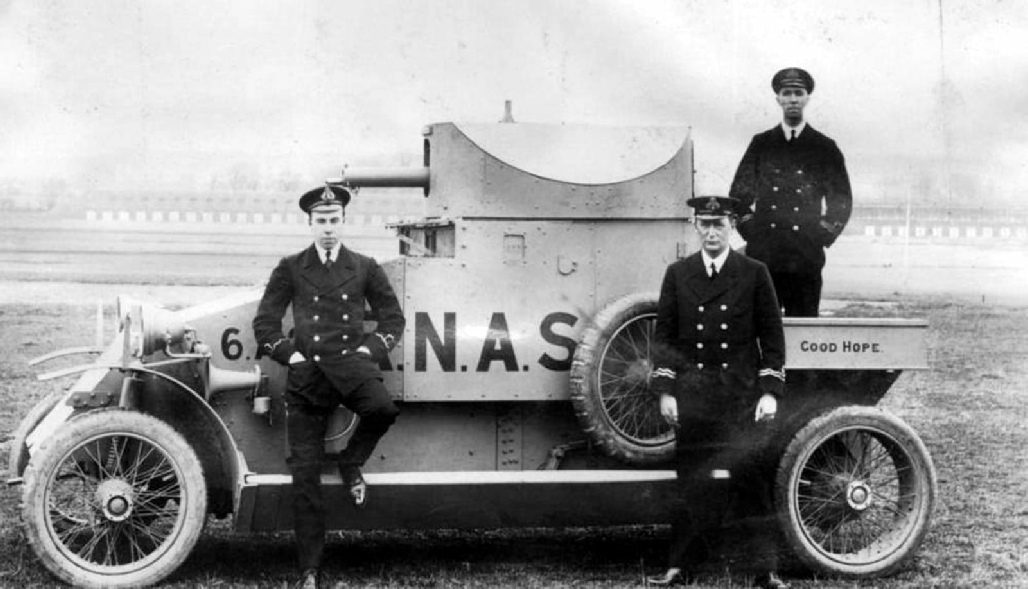
Royal Naval Air Service, Dunkirk, Western Front, 1914
3D Printed 1/72

In one of the strangest quirks of military history, it was the Royal Naval Air Service
(RNAS) that pioneered the early use of armoured cars (and at the same time, Combat
Search & Rescue -
Early in WW1, facing a need to recover downed RNAS pilots and crew, the Navy had been using a Lanchester motor vehicle for this purpose, where necessary scooting into disputed areas to rescue their men. They quickly realised that some sort of improvised armour protection would be useful, along with some armament for self defence. Seeking a more permanent solution and guided by suggestions from the front line units, the Admiralty Design Department quickly came up with an armoured body and machine gun turret for the Lanchester, with 36 delivered to the Western Front in 1915 where their use was expanded to include reconnaissance, fire patrol and protection of the RNAS' airfields.
The War Office quickly realised the utility of this concept and commandeered all available Rolls Royce vehicles to be modified in a similar way, innitially using the Admiralty designed turret.
The utility of these wheeled vehicles was short-
Here they saw wide service, travelling as far south as Turkey, Romania and Iran. The Lanchesters proved very robust and reliable, but as the Russian Revolution took hold in 1917 (and Russia drew back from war with Germany), they were returned to the UK and mostly scrapped.
The Lanchester's reinforced chassis were produced at the Lanchester plant in Birmingham, the armoured elements by William Beardmore and Co in Glasgow, and final assembly was at the Vickers plant in Erith (Kent) or at the Talbot Works in Barlby road (North Kensington).
Printing a Lanchester model
This was actually one of the first set of 3D files that I downloaded, even before my printed was delivered! The main attraction for me was the fact that they were operated by the RNAS, but I also wanted to see if my (cheap) printer could match the photographs of models printed from these files.
The download cost me £6.28. I rescaled from 1/64 to 1/72 and the model’s measurements
match the dimensions on Wikipedia exactly. The downloads included a complete model
with supports already added, however my first print resulted in some issues with
the wheels not printing completely. I then switched to the files that provided component
parts (hull, wheels, turret) but once again had issues with the wheels. A 3rd printing
attempt covering the wheels alone but oriented differently, worked much better -
The detail on the finished model is better than I expected and was a good way to test out the initial capabilities of my printer, plus learning a little more about how and where to place supports.

Link to Website Index:
Background -
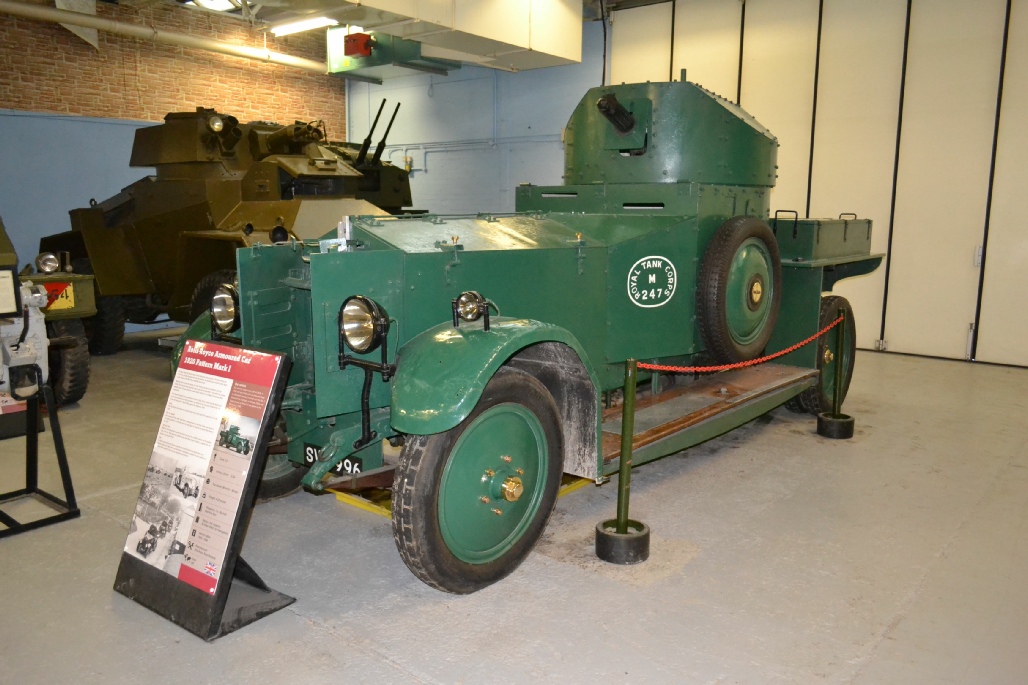
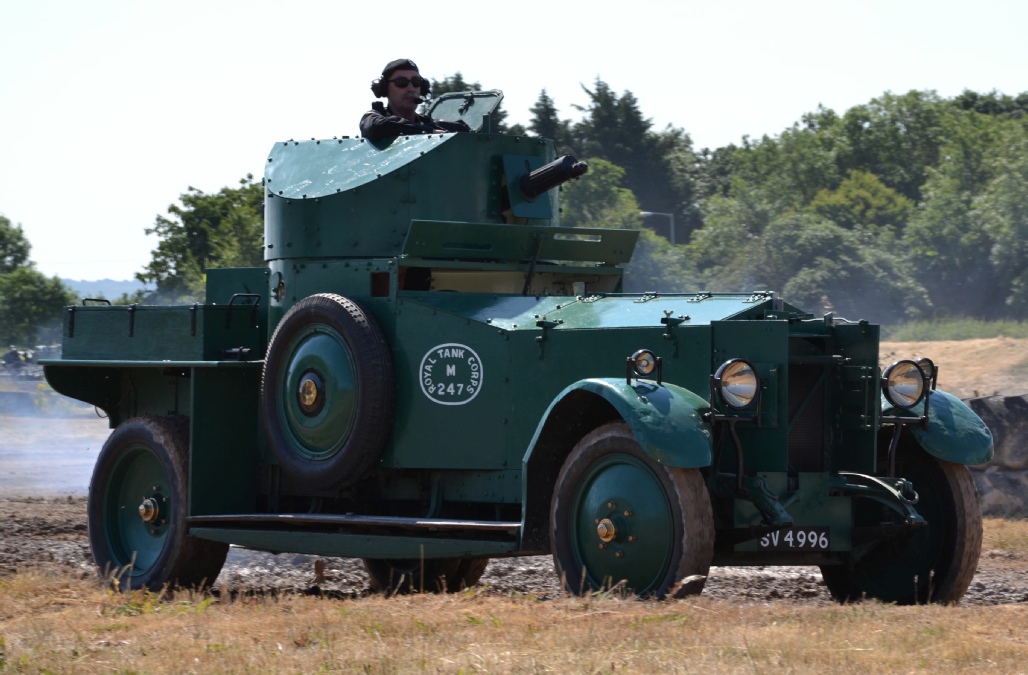
Rolls Royce Armoured Car Mk.1 1920 Pattern
19th Armoured Car Company (1st Lothians & Border Yeomanry) 1921 to 1938
3D Printed 1/72
Following on from the RNAS’ original improvised Lanchester Armoured Cars, the War Office assessed that the Rolls Royce Silver Ghost would be a better and more robust chassis and engine for the purpose.
The Admiralty Design Department therefore adapted the design to fit the Rolls Royce,
initially using the same turret design (although different versions were added later).
With the first vehicles delivered to the Western Front in December 1914, their career
was short-
Updates took place in 1920 and 1924. A separate design, very like the original Admiralty pattern, was purchased by the RAF for airfield defence. Thirteen were donated to the Irish Free State Army during the Irish Civil War against the IRA, remaining in service until 1944.
In the UK, Rolls Royce Armoured Cars were supplied to Territorial Army units, including the Lothian And Borders Yeomanry, who operated them until 1938, when they were replaced by the Vickers Mk.VI light tanks and Scout Carriers that took them to war in France in late1939.
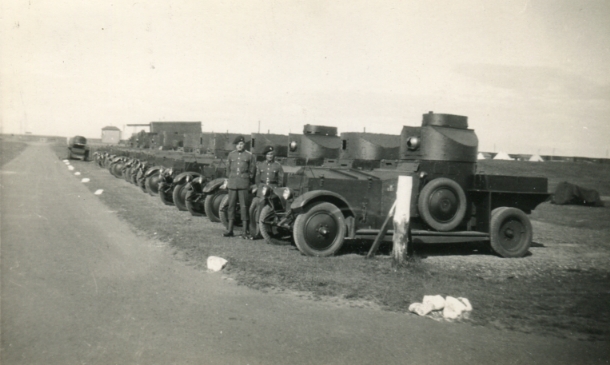
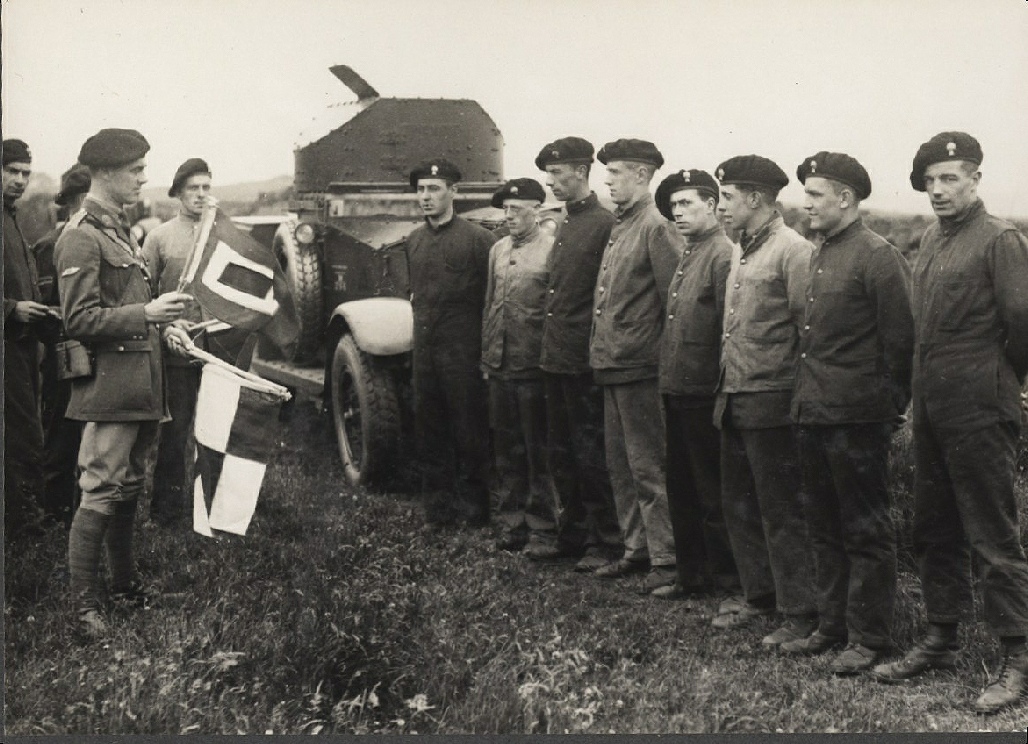
Above and below: The 1st Lothian & Borders Yeomanry at a training camp in Fife during the 1930s.
Note the variations in turret shape, with some vehicles carrying the Commander’s Cupola of the 1924 pattern.
Printing a Rolls Royce Armoured Car model
Having finished the Lanchester, this one immediately sang out to me, not least because the STL files (again via Cults3D) were free, but also because it was operated by my Grandad’s Regiment, the L&B Yeomanry !
Once again I had to rescale it, this time from 1/50th to 1/72 and I did have a few issues printing the wheels although thie finished model was printed in a single “wheels on” print. It looks strangely small alongside the Lanchester, but I have checked measurements and again it agrees with Wikipedia (and the turrets are the same size).