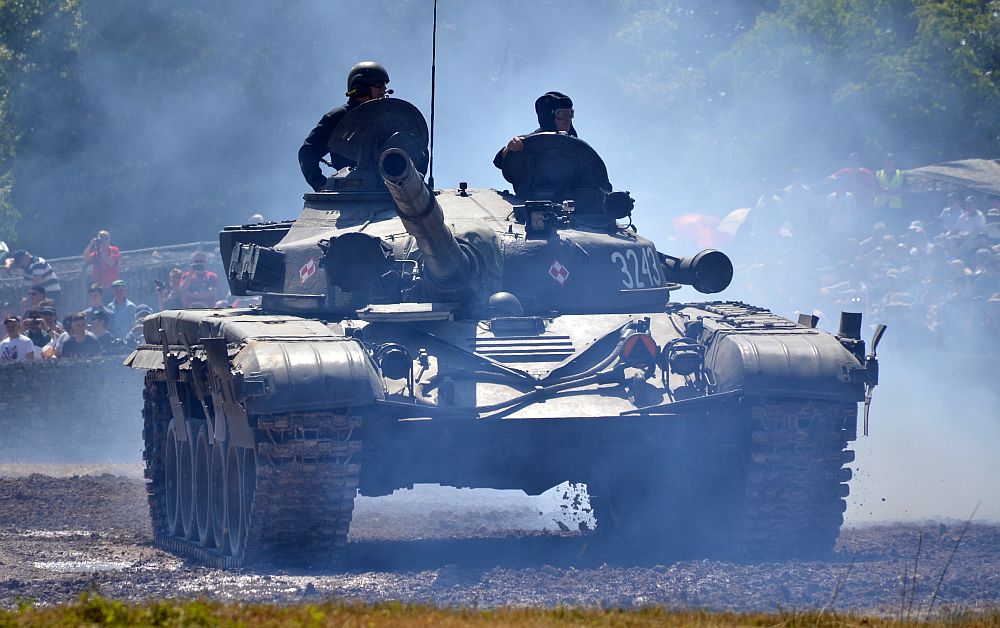
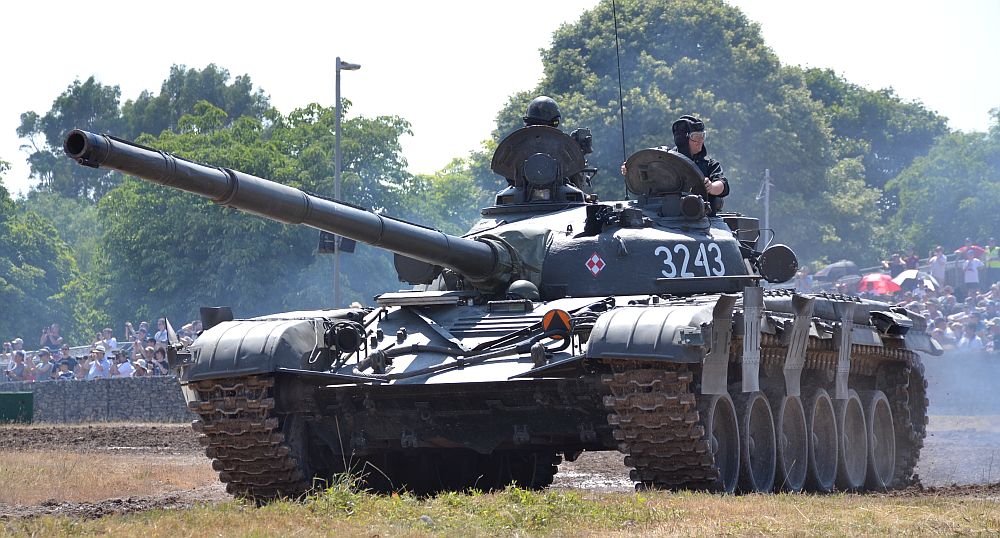
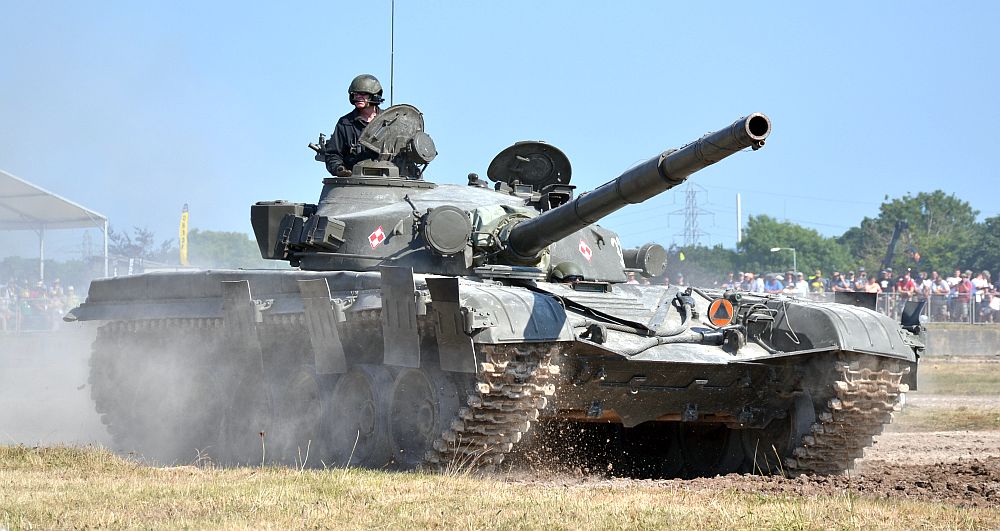
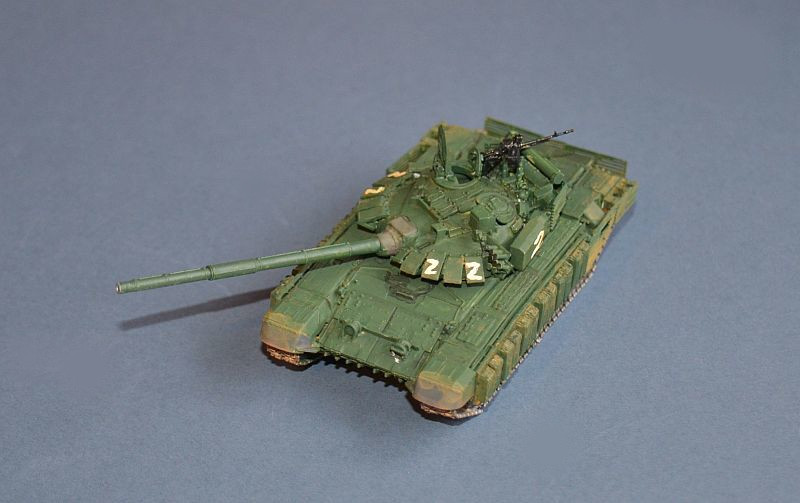
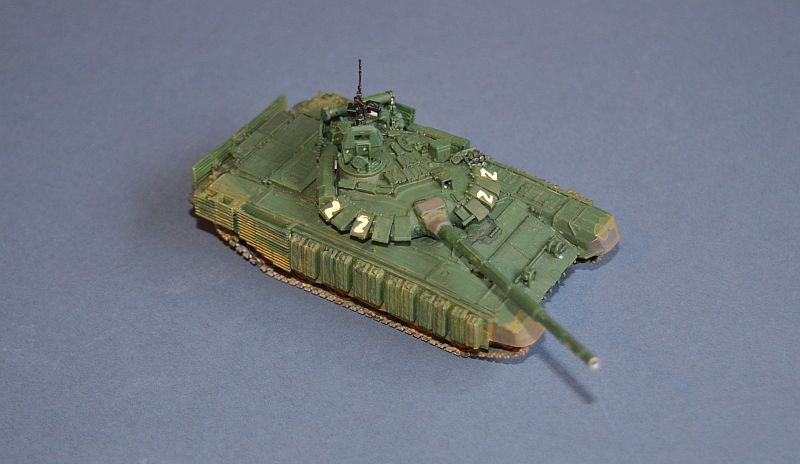
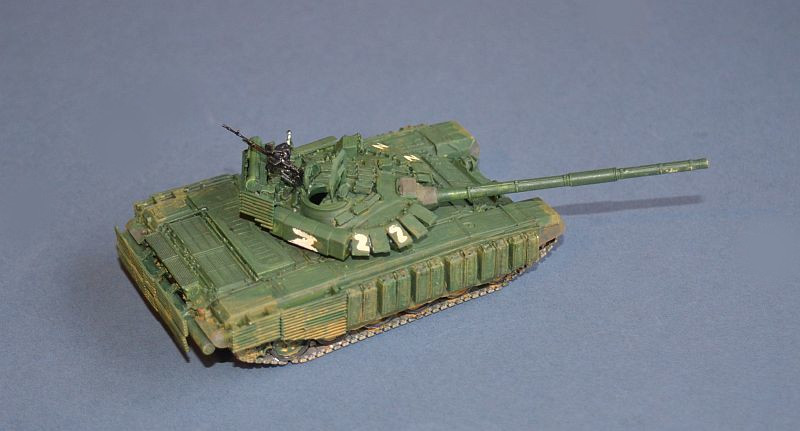
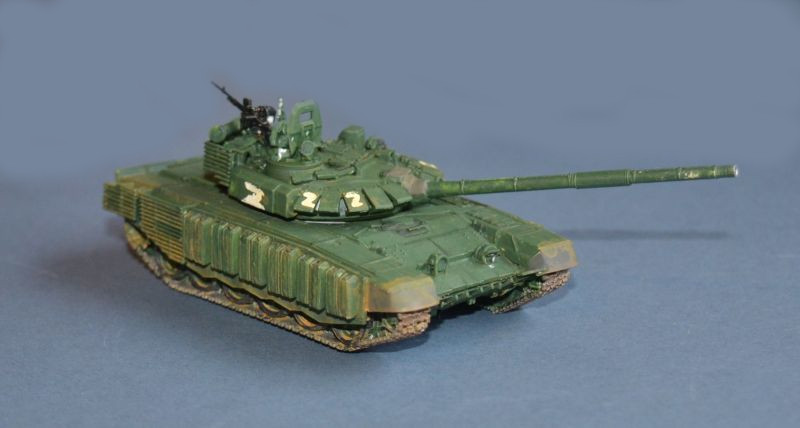
T-72 B3M Main Battle Tank
Russian Army Group Z, Occupied Ukraine, 2026
Meng 1/72
Entering initial production in 1971, the Soviet T-72 was an improved version of the
T-64. Designed for a conscript army and thus easy to operate and maintain, over
25,000 have been built and used by more than 40 countries. It remains in limited
production today (2026) primarily as replacements for tanks destroyed in Ukraine.
The original concept was based around a "Mobilisation Tank" that could be produced
quickly and cheaply in the event of hostilities. Using an autoloader allowed the
crew to be reduced to 3 personnel, a commander, driver and gunner, whilst the 125mm
gun was capable of defeating most western tanks of the era. Due to problems with
the T-64 the T-72 moved into series production and was subject to regular incremental
improvements to its engine, armour and sensor packages, becoming the most common
tank used by Warsaw pact countries until the 1990s. The T-72 is a very light tank,
weighing between 41 to 49 tonnes (depending on armour package), giving it good mobility
and the ability to cross bridges that would be too weak for Western designs (e.g.
the Abrahms weighs in at nearly 80 tonnes).
The combat record of the T-72 has been mixed, with Syrian T-72s seeing some success
against Israeli Merkavas in Lebanon, and Iraqi tnaks acquitting themselves well against
the Iranians. However, during the Gulf Wars, Iraqi tanks were widely outmatched
by allied forces, not least because they were able to engage at much longer distances
than the T-72s. The type (operated by both sides) also fared badly during the Chechen
and Georgian wars. Russian T-72s are generally more capable than export models,
with better armour and sensors and (subject to crew training and tactics) have been
assessed as capable of parity with late 1990s/early 2000s western tanks like the
Leopard 2.
T-72s now make up the majority of Russian tanks fighting in Ukraine, where they have
suffered very substantial losses. Although tank on tank encounters have been rare,
it is believed that over 1,200 Russian T-72s have been destroyed so far (according
to open-source intelligence group Oryx), mainly by Javelin/NLAW top attacks. Pictures
of T-72 turrets exploding into the sky have become an iconic image of Ukrainian resistance
to the Russian invasion (the Turret has an alarming tendency to fly upwards when
the tank is hit, partly because of the tank's ammunition stowage arrangements). Ukraine
has also operated the T-72, with approximately 380 tanks lost to date (Oryx).
Building the MENG T-72 Kit
This is my first build of a Meng model, and I am impressed. The kit is superbly
moulded, with fine detail and excellent fit throughout.
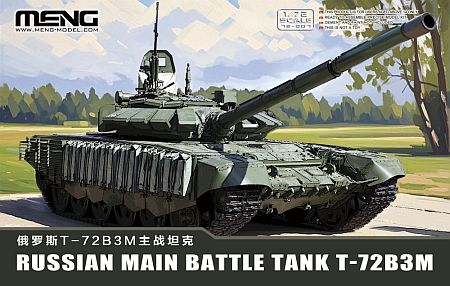
It is an easy build, with the sole exception of the individual ERA packs for the
turret, and the soft plastic used makes removal of small parts from the sprue an
easy task.
The length and link tracks are not my favourite, but they worked well enough (I did
remove one link). As with other add-on armour vehicles that I have built, some thought
needs to go into the painting sequence as some areas will be hard to reach, e.g.
once the slat armour, side skirts and ERA are added.
Recommended !